
AI and Quality
Zen and the Art of AI


AI can now produce essays, reports, summaries, reviews, images, music, and even scientific papers at industrial scale.
Much of it is competent, some of it is impressive, but very little of it is memorable. This creates a strange new problem. For most of modern history, the difficulty was producing information whereas now the challenge is deciding what deserves attention.
Recent discussions about AI often focus on jobs: which professions will survive automation and which will not (although much of this focus is led by AI companies seeking to promote their product). But there is a more fundamental issue that is emerging beneath this debate: as machine-generated content becomes cheaper and more abundant, the meaning of quality itself begins to change.
A recent article in The Conversation by Nathan Murray and Elisa Tersigni argued that in the age of AI, human-made art is becoming a luxury. Drawing on the work of the economist Thorstein Veblen, they were really making an argument about ‘conspicuous consumption’: the idea that consumption is used to signal wealth and status. In that world, something made by a person becomes qualitatively different from something generated at scale by AI.
This has implications beyond painting or music because it applies across culture, and increasingly across knowledge itself. A similar point appeared in another The Conversation article by Sorin Krammer on academic publishing. AI systems can now generate research papers, literature reviews, and academic prose at extraordinary speed.
The risk is not just falsehood but the emergence of an overwhelming quantity of plausible, technically competent, but ultimately unremarkable work. This is not just a problem of information but one of judgement too, essentially one of quality.
And that is why Robert Pirsig’s masterpiece Zen and the Art of Motorcycle Maintenance: An Inquiry into Values (ZMM) suddenly feels relevant again.

The Problem of Quality
In ZMM, Robert Pirsig uses the motorcycle as an analogy for how people engage with technology, arguing that modern people tend to relate to technology in one of two ways: Romantic and Classical.
The Romantic view experiences technology only at the surface level. The significance of the motorcycle here is that it functions because it delivers speed, freedom, or convenience. Its internal mechanisms remain largely irrelevant until something breaks.
In the Classical view technology is understood through its underlying structure. The motorcycle is not simply a machine that transports someone from one place to another; it is a system composed of interacting parts whose operation can be examined, adjusted, repaired, and improved.
But Pirsig’s argument was about engagement with technology. Pirsig repeatedly insists that Quality is not reducible either to technical correctness or subjective preference: “The Quality which creates the world emerges as a relationship between man and his experience.” In other words, quality is not merely located in the object, nor simply projected by the observer. It emerges through engagement itself. To understand something mechanically is not to destroy its beauty but to participate in it more fully.
That distinction feels increasingly important in the age of AI. Most people encounter generative AI romantically. The system appears as a miraculous black box capable of answering questions, producing essays, generating code, or summarising knowledge instantly. The emphasis is placed almost entirely on outputs. Does it work? Is it fast? Is the prose convincing?
But a purely Romantic relationship with AI creates obvious risks. Large language models do not “understand” knowledge in the human sense. They generate statistically plausible language based on patterns learned from enormous quantities of text. Their fluency can easily create the illusion of reliability but this is not the same as quality.
Pirsig’s crucial insight was that quality cannot be reduced either to method or outcome. Method matters, but quality is “the goal toward which method is aimed.” AI systems are becoming remarkably effective at reproducing methods and forms, yet reproducing scholarly form is not the same thing as exercising intellectual judgement.
For academics, this problem feels unusually immediate. We are at different stages of our careers: one beginning, the other long established. Yet the same question confronts both of us. What happens to intellectual life when the production of plausible research can be automated at scale?
Competence at Scale
If generative AI changes anything fundamentally, it is not simply the quantity of information we can produce. It is the economics of producing plausible information.
Academic life already rewards volume. Careers are built on publication counts, citation metrics, grant capture, and continual output. Into this world arrives a technology capable of generating competent prose almost instantly. The result may not be a collapse into obvious falsehood but there is a risk of a descent into mediocrity.
A recent preprint by Per Engzell and Nathan Wilmers warns that AI could produce a flood of “competent but unremarkable work.” The phrase captures the problem precisely. Much AI-generated writing is not incoherent or visibly fraudulent. It is in fact readable, structured, technically correct, and often persuasive at first glance, but it frequently lacks originality, depth, or genuine intellectual risk. The key is that knowledge production depends on more than fluency, it depends on trust.
Academic writing is not valuable simply because it resembles scholarship. Its value rests on a deeper infrastructure of verification and scrutiny. Citations allow claims to be traced back to evidence. Peer review exists, however imperfectly, to test whether arguments withstand criticism. Expertise is important because it provides the judgement required to distinguish insight from performance.
Yet that infrastructure is already showing signs of strain. The preprint server arXiv announced new policies in an attempt to deter the recent influence of AI generated content. A recent audit of 2.5 million biomedical papers identified a sharp rise in fabricated citations: references that appear convincing but do not actually support the claims being made. Similarly, a study of 111 million papers across an array of preprint servers found a rapid rise in fabricated references. These are not minor technical mistakes. Citations are the scaffolding of research and when the scaffolding becomes unreliable, confidence in the surrounding knowledge begins to weaken as well.
Scientific fraud is not new. The notorious 1998 paper by Andrew Wakefield and co-authors linking vaccines to autism demonstrated how damaging false research can become once it enters public debate. The paper was later retracted and the British Medical Journal described it as fraudulent. Yet the damage was done: it helped fuel anti-vaccine sentiment that persists today.
AI changes the scale of the problem. Fraud no longer requires extraordinary effort. Low-quality or fabricated work can now be produced cheaply, rapidly, and in enormous quantities. The issue is not simply more bad science, but that identifying good science is becoming harder. This relates to the idea of the so-called ‘Matthew effect’ where there is a disproportionate focus on well-known scholars at the expense of new and divergent views of scholarship.
This is where Pirsig’s idea of quality becomes newly relevant. In a world saturated with plausible text, polished language, and machine-generated competence, quality is harder to detect because superficiality increasingly substitutes for understanding.
Pirsig warned that technological problems often arise not from machines themselves but from the detached, objectifying mindset surrounding them. “The real evil isn’t the objects of technology,” he wrote, “but the tendency of technology to isolate people into lonely attitudes of objectivity… Quality destroys objectivity every time.”
This is an important point because AI encourages us to treat knowledge as output rather than understanding.
AI in the classroom
The university classroom is one of the first places where these tensions become visible in everyday life.
Students can now generate essays in seconds that are grammatically polished, structurally coherent, and often difficult to distinguish from competent undergraduate work. In many cases the prose is better organised than the average student submission from only a few years ago. Yet something important is often missing.
Anyone who teaches regularly quickly recognises the difference between writing that emerges from understanding and writing that merely imitates its surface features. The latter tends to avoid specificity. Arguments remain curiously frictionless and concepts appear in the correct order but without much intellectual weight behind them. The prose performs competence without demonstrating understanding.
Pirsig anticipated something very similar in his discussion of rhetoric and education. He mocked systems that reduced writing to formal correctness while losing sight of intellectual substance: “Poor rhetoric, once ‘learning’ itself, now becomes reduced to the teaching of mannerisms and forms… We’ll learn the Truth in our other academic courses, and then learn a little rhetoric so that we can write it nicely and impress our bosses.”
That criticism feels uncomfortably contemporary because large language models are extraordinarily good at producing precisely this kind of “empty rhetoric”: prose that satisfies stylistic expectations while remaining detached from real intellectual struggle.
For decades universities treated writing partly as evidence of thought. The essay was important not simply because of the final product, but because the process of constructing an argument forced students to clarify ideas, confront contradictions, and develop judgement.
Generative AI weakens that relationship between writing and thinking. A student can now produce a plausible essay without passing through many of the intellectual struggles that writing traditionally required. The result may satisfy the formal criteria of assessment while bypassing much of the cognitive process that higher education is supposed to cultivate.
This is where Pirsig’s distinction becomes useful again. AI encourages a Romantic relationship with knowledge. The emphasis shifts toward outputs, appearances, and functional performance. Does the essay sound convincing? Does it meet the rubric? Does it produce the required result?
But education, at least at its best, depends on a more Classical engagement. Understanding requires wrestling with concepts, testing arguments, examining assumptions, and learning how ideas are constructed rather than merely consumed.
The danger is not simply that students will use AI, they certainly will, but that institutions begin adapting themselves around machine-generated competence, gradually mistaking fluent performance for genuine understanding.
In our own teaching, this has started to change how we approach assessment. Rather than simply banning AI use, one approach is to confront students directly with its strengths and weaknesses. We sometimes ask students to critically evaluate essays produced by generative AI using concepts and material from the course itself.
The exercise is revealing. At first glance the essays often appear impressive: coherent structure, confident prose, correct terminology, plausible argumentation. But closer inspection exposes recurring weaknesses. Arguments become generic, evidence is used superficially, and important distinctions disappear.
Students usually recognise this quite quickly once they begin interrogating the text critically. The exercise becomes less about detecting “cheating” and more about learning how to identify quality. One aspect of this approach is seeing how prevalent the ‘Matthew effect’ is in areas of research where we have deeper understanding. If it is widely prevalent in places where we have the greatest expertise, then how distortionary is it elsewhere (the ‘It Looks Good to Me’ problem)?
In that sense, AI may force universities to return to an older educational question: not whether students can produce information, but whether they can evaluate it intelligently.
The new Affluent Society
The problem created by generative AI is not simply technological. It is economic and cultural as well. AI changes the conditions under which knowledge is produced, distributed, and consumed. For most of modern history, writing required time, expertise, and labour. Research demanded institutional resources and publication created natural scarcity.
That world is disappearing rapidly. AI has solved the scarcity of knowledge production but without addressing the quality of the output. This also has implications for AI systems themselves which now increasingly run the risk of model collapse in a world of zero-quality control.
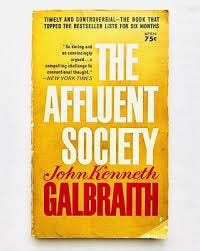
In The Affluent Society, John Kenneth Galbraith argued that advanced economies had entered a new historical condition. Industrial capitalism had become extraordinarily effective at producing material abundance. The central economic problem was no longer simply scarcity. It was learning how to live intelligently amid plenty. Generative AI may create a similar condition for knowledge. In a world saturated with plausible text, polished prose, and synthetic fluency, quality becomes both harder to define and more important to recognise.
This is why ZMM suddenly feels relevant again. Pirsig’s argument was never really about motorcycles. It was about attention: the difference between merely consuming technology and understanding the systems that shape our lives. That distinction now extends to knowledge itself.
In later editions of ZMM, Pirsig reflected on certain rare works that he defined as “culture-bearing books”: works that do not merely reflect a culture but carry it somewhere new. Generative AI may become extraordinarily effective at reproducing the surface forms of culture, scholarship, and argument. What remains less clear is whether systems built from statistical pattern recognition can produce work that genuinely reorients understanding rather than recombining what already exists.
Interesting read, I did my engineering degree back in the late 70s and will share that I found it tough.(Hence Valuable) What it did teach was how to frame problems and issues, analyse information and move forward to solutions and has served me well throughout my career. I now use various AIs and compare it to a smart graduate assistant or team of global experts but keep the common sense and judgement to myself.
Like you I am concerned about the impact of AI on education today and that real innovation, insight and judgement will be diluted. Not sure how education can move forward ensuring full people development whilst taking advantage of the cognitive amplification of using appropriate AI